
Is It Allergies — or Is It Sleep Apnea?
Is It Allergies or Sleep Apnea? Key Differences Explained
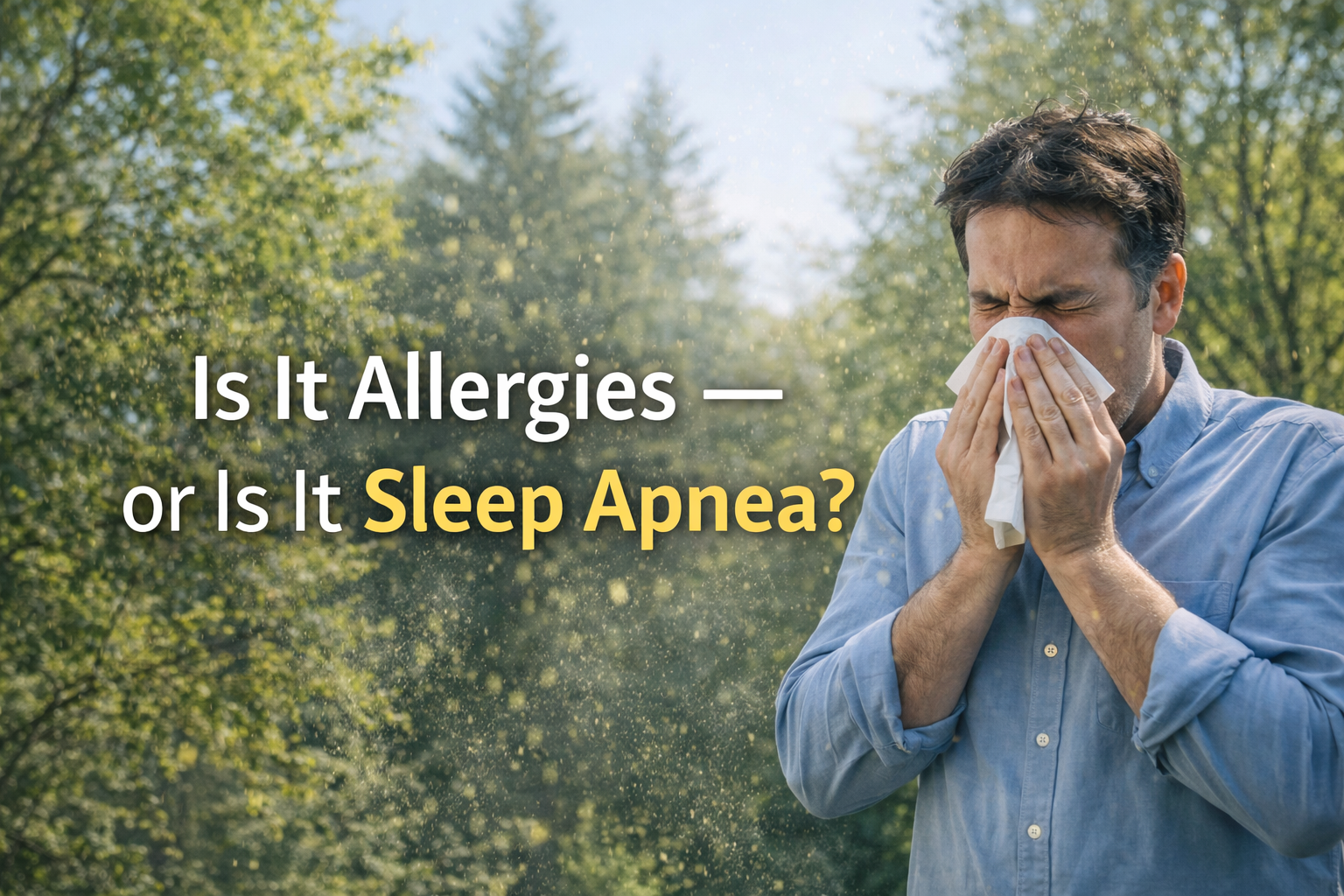
Waking up tired. Morning headaches. A dry mouth. Daytime brain fog.
If you experience these symptoms, it’s easy to blame seasonal allergies — especially during high-pollen months. But what many people don’t realize is that sleep apnea can present with surprisingly similar symptoms.
Understanding the difference between allergies and sleep apnea is critical because one is temporary and environmental, and the other is a chronic medical condition that can significantly impact long-term health.
Why Allergies and Sleep Apnea Feel Similar
Seasonal allergies (allergic rhinitis) cause inflammation in the nasal passages. According to the American College of Allergy, Asthma & Immunology, common allergy symptoms include:
- Nasal congestion
- Sneezing
- Postnasal drip
- Sinus pressure
- Fatigue
Now compare that to obstructive sleep apnea (OSA). The American Academy of Sleep Medicine describes OSA as repeated airway collapse during sleep, leading to:
- Loud snoring
- Pauses in breathing
- Morning headaches
- Dry mouth
- Excessive daytime sleepiness
The overlap — especially fatigue and morning symptoms — often causes confusion.
Key Differences Between Allergies and Sleep Apnea
While symptoms can overlap, the underlying causes are very different.
1. Timing of Symptoms
- Allergies: Often worse during certain seasons or after exposure to triggers (pollen, dust, pets).
- Sleep Apnea: Occurs nightly, regardless of season.
If symptoms persist year-round, sleep apnea becomes more likely.
2. Snoring and Breathing Pauses
Snoring alone can occur with allergies due to congestion. However:
- Loud, chronic snoring
- Gasping or choking during sleep
- Witnessed breathing pauses
These are hallmark signs of sleep apnea — not typical allergy symptoms.
3. Daytime Sleepiness Severity
Allergies may cause mild fatigue. Sleep apnea often causes:
- Falling asleep during meetings
- Difficulty concentrating
- Increased accident risk
The National Heart, Lung, and Blood Institute notes that untreated sleep apnea leads to fragmented sleep and repeated oxygen drops — which significantly impair daytime function.
4. Response to Treatment
If antihistamines or nasal sprays relieve symptoms, allergies are likely contributing.
If fatigue and poor sleep persist despite allergy management, an underlying sleep disorder should be considered.
Can Allergies Make Sleep Apnea Worse?
Yes — and this is where the two conditions intersect.
Nasal inflammation increases airway resistance. When nasal breathing becomes difficult:
- Mouth breathing increases
- Airway collapse risk rises
- CPAP tolerance may decrease
Research suggests that untreated allergic rhinitis can worsen obstructive sleep apnea severity, especially in individuals already predisposed to airway narrowing.
Managing allergies may improve sleep quality — but it does not treat sleep apnea itself.
Red Flags That It’s More Than Allergies
Consider a sleep evaluation if you experience:
- Loud nightly snoring
- Morning headaches
- Waking up gasping
- High blood pressure
- Persistent fatigue despite 7–8 hours in bed
- A family history of sleep apnea
According to the Centers for Disease Control and Prevention, sleep disorders are frequently underdiagnosed, and many adults attribute symptoms to stress, aging, or allergies instead.
Why Proper Diagnosis Matters
Allergies are typically manageable and seasonal.
Sleep apnea, however, is linked to:
- High blood pressure
- Heart disease
- Type 2 diabetes
- Stroke risk
- Cognitive impairment
Mislabeling sleep apnea as “just allergies” can delay diagnosis for years.
A simple sleep study — either in-lab or at home — can determine whether airway obstruction is occurring during sleep.
What to Do If You’re Unsure
If you suspect allergies:
- Track symptom patterns seasonally
- Identify environmental triggers
- Speak with an allergy specialist
If you suspect sleep apnea:
- Ask a bed partner about snoring or breathing pauses
- Complete a sleep apnea screening questionnaire
- Schedule a consultation with a sleep provider
In some cases, both conditions may be present, and treating both yields the best outcome.
Not all fatigue is caused by allergies. While congestion and sinus pressure can disrupt sleep, chronic snoring, breathing pauses, and persistent daytime exhaustion point toward something more serious.
Understanding the difference between allergies and sleep apnea is the first step toward better sleep — and better long-term health.
If symptoms persist beyond allergy season or significantly impact your daily function, a sleep evaluation may provide clarity and effective treatment options.