
New Year's Resolution: Better Sleep, and What to Do If Sleep Apnea Is in the Way
This is a subtitle for your new post
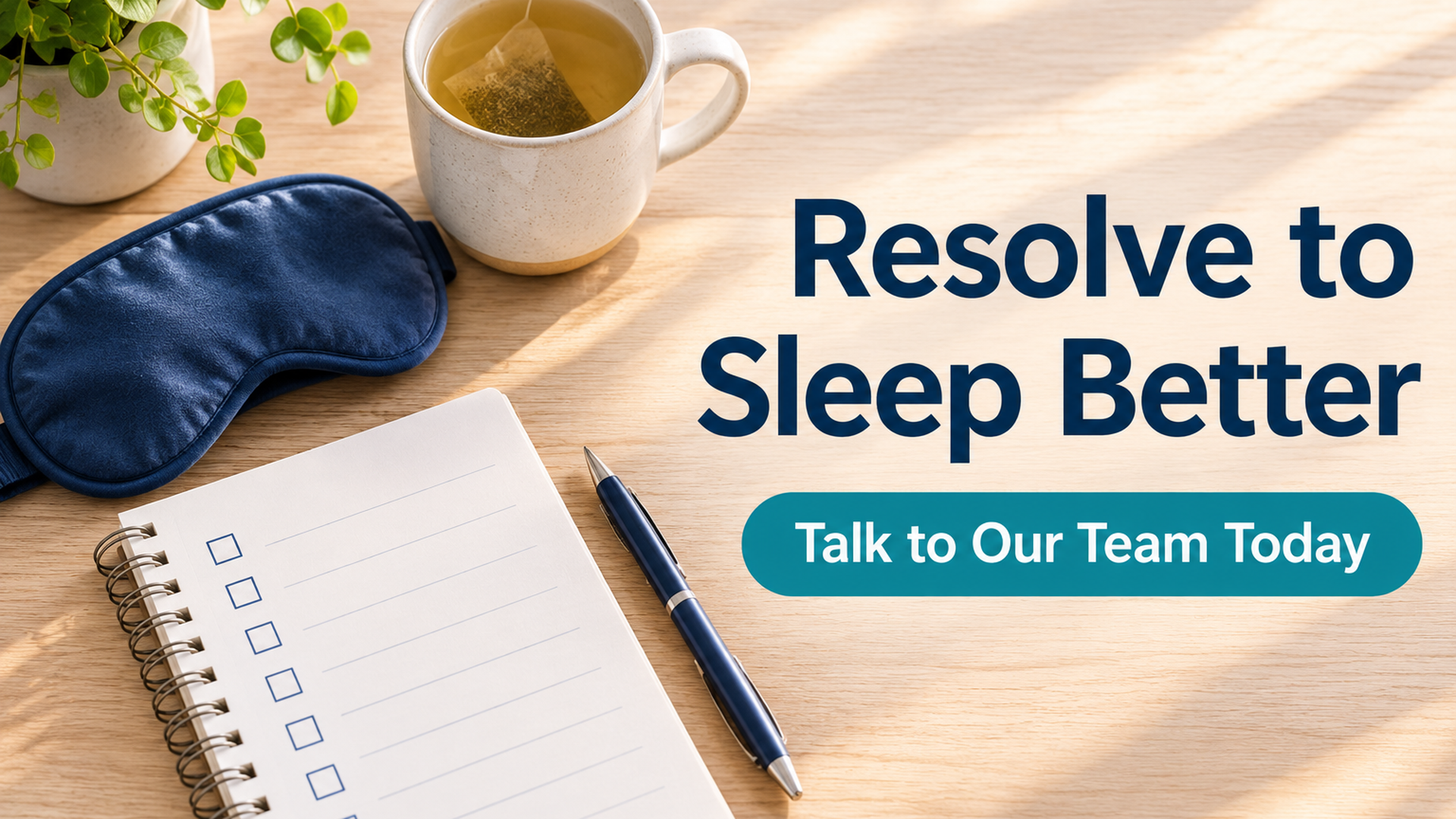
Make sleep your New Year goal. Get simple, realistic steps for better rest, from steady schedules to knowing whether sleep apnea is holding you back.
Every January, millions of people promise themselves a better year. They sign up for the gym, clean out the pantry, and set goals for work and family. Sleep rarely makes the list, even though it quietly powers almost everything else on it. It is hard to stick to a workout plan, a new eating routine, or a big career goal when you are running on empty.
This year, consider making sleep the foundation of your resolutions instead of an afterthought. Small, realistic changes can improve how rested you feel, and for some people, the process uncovers something that has been holding them back for years: undiagnosed sleep apnea.
This guide walks through six sleep resolutions worth making, a simple month-long plan to start them, and a few ways to make the habits stick. You can begin any time, and the earlier you start, the better your first weeks of January will feel.
Why sleep belongs on your list
Good sleep supports nearly every goal people set at the start of the year. Rested people tend to have more energy, steadier moods, better focus, and an easier time making healthy choices. Poor sleep does the opposite. It makes cravings stronger, patience shorter, and motivation harder to find.
Sleep also matters for long-term health. Ongoing sleep problems are linked to higher risks of high blood pressure, heart disease, type 2 diabetes, and mood concerns. For people with sleep apnea, where breathing repeatedly pauses during sleep, those risks are well documented and treatable, which makes it one of the more valuable problems to address.
The best resolutions are specific, small, and measurable. Here are six that fit that description.
Resolution 1: Find out where you stand
Before changing anything, get an honest picture of your sleep. For two weeks, jot down when you go to bed, when you wake up, how rested you feel, and anything unusual such as headaches or a dry mouth. If someone shares your bed, ask what they notice: snoring, gasping, restless movement, or pauses in your breathing.
If your notes show loud snoring, daytime sleepiness, or witnessed pauses, a sleep evaluation is a worthwhile first move. Sleep apnea is common, often goes unnoticed, and responds well to treatment once it is identified. Starting the year with an answer, even a simple "your sleep looks fine," is better than another year of guessing.
Resolution 2: Keep a steady schedule
Your body loves routine. Going to bed and waking up at roughly the same time every day, including weekends, helps your internal clock run smoothly. A steady schedule makes it easier to fall asleep, easier to wake up, and less likely that you will lie awake at 2 a.m.
Start with your wake-up time, because it is the anchor. Pick a time you can keep seven days a week, then work backward to allow seven to nine hours in bed. If your current bedtime is far from that target, shift it by 15 minutes every few days instead of all at once.
Resolution 3: Move your body most days
Regular physical activity improves sleep quality, helps you fall asleep faster, and supports a healthy weight. Research has also found that exercise can modestly improve sleep apnea severity in some people, even without major weight loss, though it is not a replacement for treatment.
You do not need a gym membership. A brisk 20 to 30 minute walk most days is a strong start. Try to finish vigorous workouts at least a few hours before bed, and get outside during the day for natural light, which helps set your body clock.
Resolution 4: Rethink the nightcap
Many people use an evening drink to unwind, and it can feel as though it helps with sleep. In reality, alcohol tends to fragment sleep, and it relaxes the muscles of the throat. For anyone with sleep apnea, that is associated with longer breathing pauses and lower oxygen levels overnight.
You do not have to give up alcohol entirely. A realistic resolution is to stop drinking at least three to four hours before bed. Replace the habit with something you enjoy, such as herbal tea, a warm shower, a book, or a few minutes of stretching. The same goes for caffeine: try cutting off by early afternoon.
Resolution 5: Support a healthy weight, gently
Excess weight can narrow the airway and is one of the risk factors for sleep apnea. Studies have found that even modest weight loss can reduce the severity of sleep apnea in some people. At the same time, weight is only one factor, and plenty of people with sleep apnea are at a healthy weight.
If weight is part of your goals, focus on habits instead of a number: more vegetables, fewer late-night snacks, regular meals, and consistent movement. Avoid crash diets, which tend to backfire and disrupt sleep. A conversation with your doctor can help you set goals that fit your health.
Resolution 6: Treat what you find, and keep showing up
If an evaluation reveals sleep apnea, the most important resolution is to follow through. Treatment only works when it is used, and the best treatment is the one that fits your life. Options include CPAP, custom oral appliance therapy provided by a dentist trained in sleep medicine, positional strategies, and lifestyle changes. Your provider can help you choose among them.
Once you start, keep your follow-up appointments. Adjustments, check-ins, and sometimes repeat sleep testing help make sure your treatment is doing its job. Many people notice better energy and mood within weeks, which is a powerful reason to keep going.
A simple 30-day plan
If you like structure, try this month-long approach. Adjust it to fit your life.
- Days 1 to 7: Observe. Keep a sleep log. Note your bedtime, wake time, and how you feel. Ask a partner or family member what they notice at night.
- Days 8 to 14: Set the anchor. Choose a consistent wake-up time and stick to it every day. Begin moving your bedtime earlier in small steps.
- Days 15 to 21: Build the evening. Add a 30 minute wind-down routine. Put screens away, dim the lights, and stop alcohol and caffeine earlier.
- Days 22 to 28: Add movement. Fit in a daily walk or other activity, ideally earlier in the day and with some daylight.
- Days 29 to 30: Review. Look back at your log. If you still feel unrefreshed, snore, or have been told you stop breathing in your sleep, schedule a sleep evaluation.
Making the habits stick
Most resolutions fail not from lack of desire but from being too big or too vague. A few strategies improve the odds:
- Start small. One or two changes at a time beat a total overhaul.
- Be specific. "Get to bed by 10:30 on weeknights" works better than "sleep more."
- Attach habits to routines. Link a new habit to something you already do, such as a short stretch after brushing your teeth.
- Track progress. A simple checkmark on a calendar adds motivation.
- Expect slip-ups. One bad night is not a failure. Pick up again the next day.
- Tell someone. A partner, friend, or coworker can encourage you and help you notice changes.
When habits are not enough
Good sleep habits help almost everyone, but they cannot fix a physical problem with the airway. If you are doing all the right things and still feel tired, it may be time to look deeper. Consider asking for an evaluation if you notice:
- Loud, frequent snoring
- Gasping or choking during sleep, or pauses noticed by someone else
- Waking with a dry mouth, sore throat, or headache
- Feeling tired after a full night in bed
- Dozing off during quiet activities or while driving
- Trouble concentrating or changes in mood
These signs are common, they are treatable, and they are not a normal part of getting older or being busy.
Your First Night of the New Year
You do not have to wait for January 1 to start. A few small changes this month can make your holiday season easier and set you up for a stronger year. And if your sleep has been a struggle for a long time, the best resolution of all may be a simple one: finding out why.
Reach out to our team to schedule a sleep evaluation and start the year with answers.