
Snoring vs. Sleep Apnea: How to Tell the Difference
Snoring vs. Sleep Apnea: How to Tell the Difference
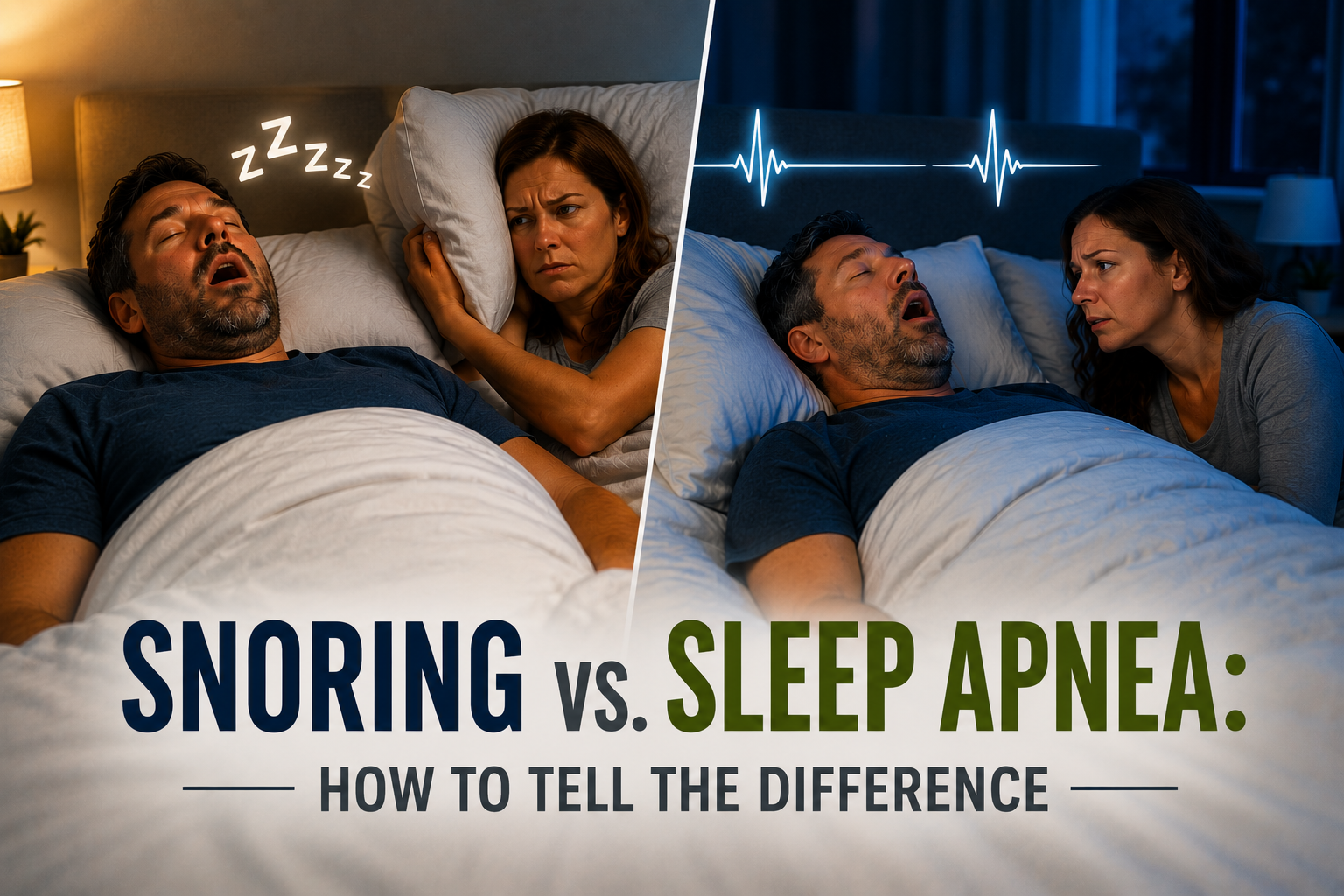
Not all snoring is sleep apnea, but some is. Learn the key differences between snoring and obstructive sleep apnea and when to see a sleep specialist.
Almost everyone snores occasionally. A stuffy nose, a glass of wine before bed, or sleeping in an unfamiliar position can all trigger a noisy night. But there is a significant difference between occasional snoring and obstructive sleep apnea (OSA), a chronic sleep disorder that affects millions of Americans and carries serious long-term health risks. Knowing how to tell the two apart is the first step toward getting the right diagnosis and, if needed, the right treatment.
What Actually Causes Snoring
Snoring happens when airflow through the mouth and throat is partially obstructed during sleep. As you breathe, the relaxed soft tissue in your airway, including the soft palate, uvula, and the base of the tongue, vibrates against the back of the throat. That vibration is what produces the sound.
Common causes of snoring include nasal congestion, alcohol consumption, obesity, sleeping on your back, and age-related muscle relaxation in the throat. For many people, snoring is simply a nuisance with no serious health implications. However, loud, chronic snoring, particularly when it is accompanied by other symptoms, is one of the most common warning signs of obstructive sleep apnea.
What Makes Sleep Apnea Different
Obstructive sleep apnea is not just loud snoring. It is a condition in which the airway becomes completely or partially blocked repeatedly throughout the night, causing breathing to stop for ten seconds or longer. These pauses in breathing, called apnea events, can happen dozens or even hundreds of times per night depending on severity.
Each time breathing stops, the brain registers a drop in oxygen levels and briefly wakes the body to restore airflow. Most people with sleep apnea are completely unaware this is happening. They do not remember waking up, but their sleep is fragmented at a level that prevents them from reaching the deep, restorative stages their body needs. Over time, this oxygen deprivation and sleep disruption takes a serious toll on cardiovascular health, cognitive function, blood pressure, and metabolic health.
Key Differences Between Snoring and Sleep Apnea
The sound alone is not always enough to distinguish snoring from sleep apnea, though sleep apnea snoring tends to be louder and more irregular. The clearest distinguishing factor is what happens between the snoring sounds. With obstructive sleep apnea, a bed partner will often notice pauses in breathing followed by a gasping, choking, or snorting sound as the person resumes breathing. That pattern, snore, silence, gasp, is a classic and significant red flag.
Daytime symptoms are another major differentiator. Simple snoring, on its own, does not typically cause significant daytime impairment. Sleep apnea almost always does. If you snore and also experience excessive daytime sleepiness, difficulty concentrating, morning headaches, irritability, or waking up with a dry mouth or sore throat, those symptoms together point strongly toward a sleep apnea diagnosis rather than benign snoring.
Risk Factors That Increase Sleep Apnea Likelihood
Certain factors make a person more likely to have obstructive sleep apnea rather than simple snoring. These include being overweight or obese, having a large neck circumference, being male, being over the age of 40, having a family history of sleep apnea, and having a naturally narrow airway, large tonsils, or a recessed jaw. Smoking and alcohol use also increase risk. That said, sleep apnea can and does occur in people who do not fit the classic profile, including women, younger adults, and people who are not overweight.
Why Getting Tested Matters
The only way to confirm a sleep apnea diagnosis is through a sleep study, either conducted in a sleep lab or with an at-home sleep test. During the study, a device monitors your breathing, oxygen levels, heart rate, and sleep stages to determine whether apnea events are occurring and how frequently. The results produce an apnea-hypopnea index (AHI) score, which measures the average number of breathing disruptions per hour and determines the severity of the condition.
Skipping a diagnosis and assuming your snoring is harmless carries real risk. Untreated obstructive sleep apnea is associated with significantly higher rates of high blood pressure, heart disease, stroke, type 2 diabetes, and motor vehicle accidents related to drowsy driving. Early diagnosis and treatment can reduce or eliminate these risks.
Treatment Options Beyond CPAP
Many people who suspect they have sleep apnea avoid getting tested because they assume treatment means wearing a CPAP mask every night. While continuous positive airway pressure (CPAP) therapy remains the most commonly prescribed treatment for moderate to severe obstructive sleep apnea, it is not the only option.
Oral appliance therapy is an effective, FDA-cleared alternative for mild to moderate sleep apnea and for patients who cannot tolerate CPAP. A custom-fitted oral appliance works by repositioning the jaw and tongue to keep the airway open during sleep. It is small, quiet, travel-friendly, and requires no mask, hose, or electricity. Many patients who have struggled with CPAP compliance find oral appliance therapy to be a life-changing alternative.
If you or someone you sleep next to snores regularly, especially with pauses in breathing or daytime fatigue, it is worth speaking with a dental sleep medicine specialist.