
The Hidden Link Between Sleep Apnea and Your Heart
The Hidden Link Between Sleep Apnea and Your Heart your new post
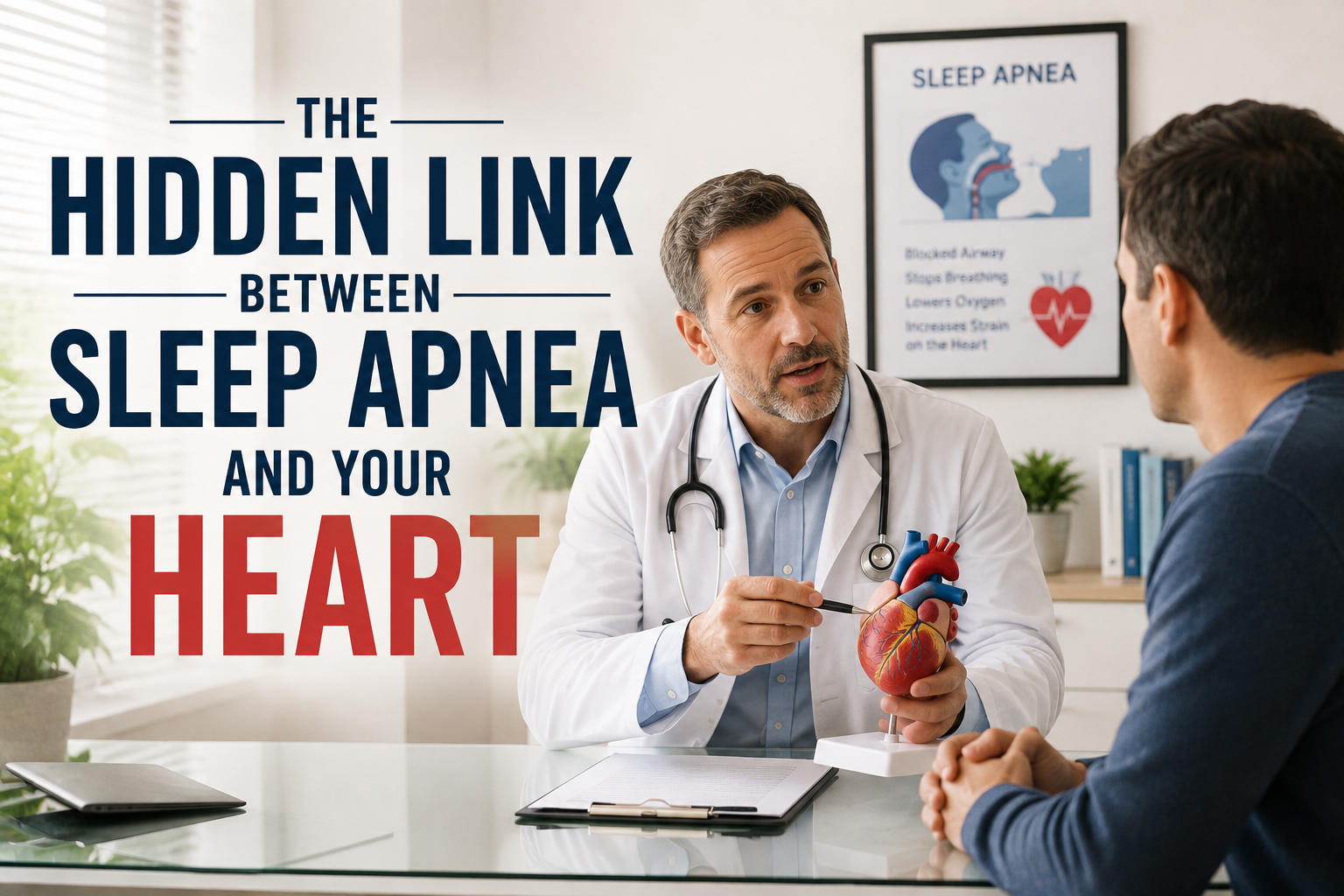
Discover the hidden link between sleep apnea and heart health, including how untreated sleep apnea can affect blood pressure and cardiovascular health.
Most people think of sleep apnea as a sleep problem. You snore, you feel tired, maybe you doze off during a boring meeting. It's easy to file it away as an inconvenience rather than something urgent. But one of the most important reasons to take sleep apnea seriously has nothing to do with how tired you feel. It has to do with your heart.
What Actually Happens Overnight
During an episode of obstructive sleep apnea, the airway partially or fully collapses, and breathing stops for a few seconds to as long as a minute. Oxygen levels in the blood drop. The body senses the problem and triggers a mini "alarm," releasing stress hormones and briefly waking the brain just enough to reopen the airway. Then the cycle repeats, sometimes dozens or even hundreds of times in a single night.
That surge of stress hormones and the sudden drop in oxygen do more than just fragment your sleep. Over time, they put real strain on the cardiovascular system.
The Cardiovascular Connection
Every time breathing stops, blood pressure spikes as the body fights to reopen the airway. Night after night, this repeated spiking has been linked to chronically elevated blood pressure that persists even during the day. It doesn't stop there. Sleep apnea has also been associated with a higher risk of irregular heart rhythms, thickening of the heart muscle, and a meaningfully increased risk of heart attack and stroke.
Researchers have found that people with moderate to severe untreated sleep apnea face a significantly higher likelihood of cardiovascular events compared to those without the condition. The heart, quite literally, doesn't get a break at night the way it's supposed to.
Why This Connection Often Gets Missed
Heart health and sleep health are usually treated as separate conversations, handled by different doctors, tracked with different tests, and rarely discussed together. Someone managing high blood pressure might be doing everything right with diet, exercise, and medication, without ever realizing that undiagnosed sleep apnea could be working against them every single night.
This is especially worth considering for anyone with high blood pressure that's difficult to control, a family history of heart disease, or risk factors like being a loud, frequent snorer. The two conditions feed into each other, and treating one without addressing the other can leave patients working harder than they need to for the results they want.
The Encouraging Part
Here's the good news: treating sleep apnea has been shown to help lower blood pressure and reduce cardiovascular strain over time. Patients who start therapy, whether that's CPAP or a custom oral appliance, often see measurable improvements not just in how rested they feel, but in numbers their doctor tracks at every checkup.
This is one of those rare health issues where addressing it doesn't just improve day-to-day quality of life. It can genuinely protect something as vital as heart health for years to come, and the return on a relatively simple diagnosis and treatment process is significant.
The Bottom Line
If you've been managing blood pressure issues, have a family history of heart problems, or know you snore heavily and haven't looked into why, it might be worth connecting those dots. Sleep apnea and heart health are more intertwined than most people realize, and getting evaluated is a straightforward step that could protect far more than just a good night's sleep.
A conversation with a dentist trained in sleep medicine or your physician is a simple place to start turning that connection in your favor.