
The Sleep Apnea and Type 2 Diabetes Connection You Might Not Know About
The Sleep Apnea and Type 2 Diabetes Connection You Might Not Know About
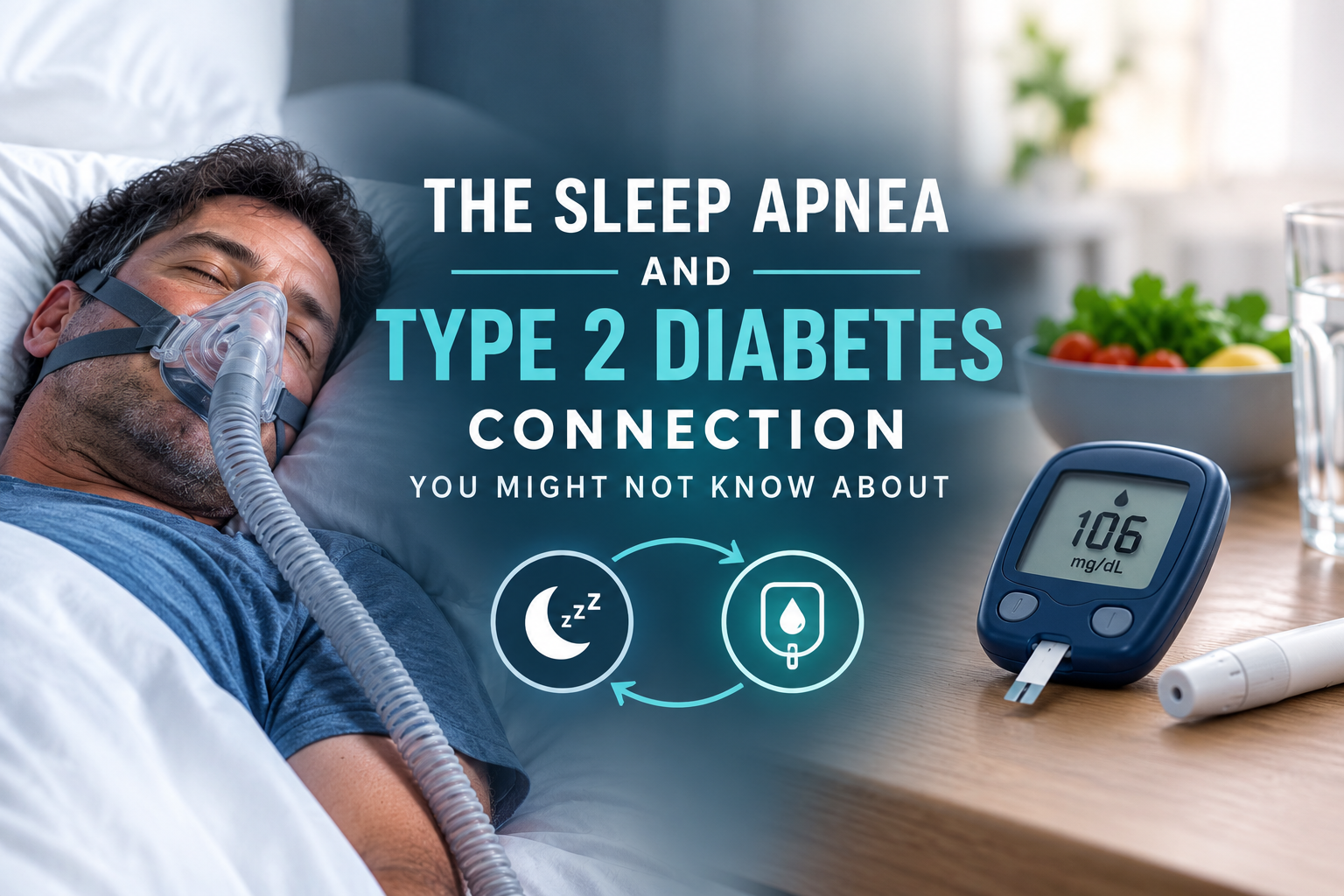
High blood pressure and heart strain tend to dominate the conversation around sleep apnea's long-term risks. But there's another condition quietly tied to untreated sleep apnea that gets far less attention: type 2 diabetes.
What the Research Shows
A long-term study out of Nagasaki University followed more than 1,400 adults without diabetes for roughly 13 years, tracking who developed the condition based on their sleep apnea status at the start of the study. People with severe obstructive sleep apnea at baseline were about 70 percent more likely to develop type 2 diabetes than those with normal sleep patterns, and that elevated risk held even among participants who were not obese.
More recent research backs this up. A 2026 cross-sectional study published in the Journal of Thoracic Disease found that among patients hospitalized for poorly controlled type 2 diabetes, more than 81 percent also had obstructive sleep apnea, and the severity of their sleep apnea tracked closely with the severity of their insulin resistance.
Why the Connection Exists
The leading explanation involves what happens to the body during repeated apnea events. Each time breathing stops, oxygen levels drop and stress hormones spike as the body works to reopen the airway. Repeated night after night, this pattern appears to interfere with how effectively the body processes insulin, contributing over time to insulin resistance, a key precursor to type 2 diabetes.
Obesity plays a role in both conditions independently, which has made it historically difficult to untangle how much of the connection is driven by weight versus sleep apnea itself. But newer studies designed to isolate sleep apnea's effect, including research in non-obese patients, continue to find a meaningful independent link.
Why This Matters If You Have Either Condition
Medical organizations have taken notice of this overlap. The International Diabetes Federation has recommended that patients with either condition be screened for the other, given how frequently they occur together and how each one can make the other harder to manage. Sleep apnea specialists echo the same message: someone managing blood sugar issues who also snores heavily, feels excessively tired during the day, or has been told they stop breathing at night has good reason to ask about a sleep evaluation.
The relationship also runs the other way in a practical sense. Prior research on patients with both conditions has found that CPAP therapy, when used consistently, is associated not just with better sleep but with measurable improvements in blood sugar control. Treating one condition may genuinely help manage the other.
A Two-Way Conversation Worth Having
If you have type 2 diabetes, or are managing prediabetes, and also deal with loud snoring, morning headaches, or daytime fatigue, it's worth mentioning to your provider. Likewise, if you've been diagnosed with sleep apnea and haven't had your blood sugar checked recently, that's a reasonable thing to bring up at your next physical.
Neither condition needs to be managed in isolation, and treating them together often produces better results than treating either one alone.