
What Your Bed Partner Notices Before You Do
What Your Bed Partner Notices Before You Do
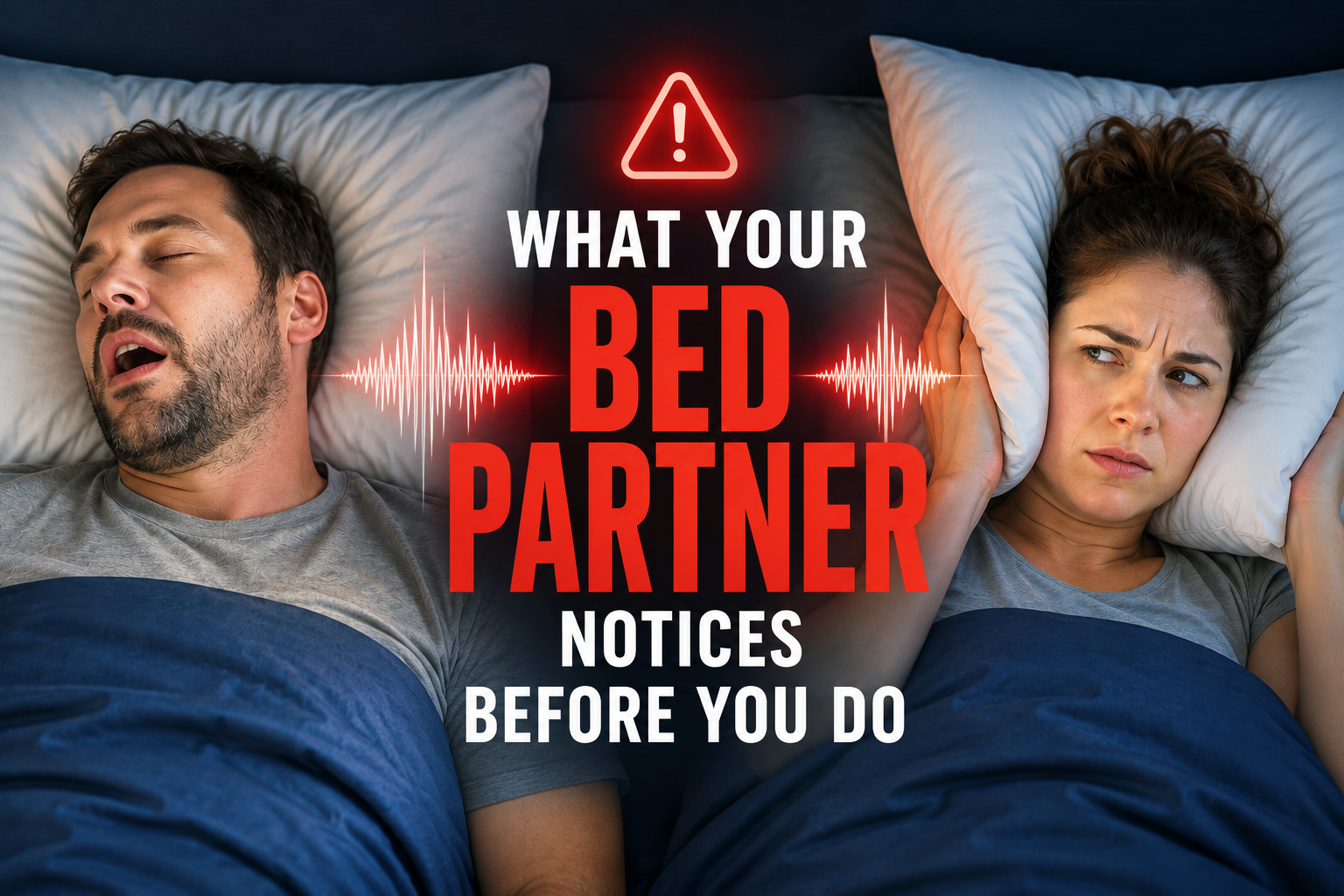
What your bed partner notices at night could be a sign of sleep apnea. Learn the warning signs of sleep apnea that often go unnoticed by the person experiencing them.
There's a strange truth about sleep apnea: the person who has it is usually the last one to know. Not from denial, but from unconsciousness. Most of what happens is only visible, or audible, to whoever's sleeping next to them. If you've been told "you were doing that thing again last night," there's a good chance your partner has been tracking symptoms you've never noticed.
A Night You Slept Through and They Didn't
Ask anyone who shares a bed with a snorer and they can usually give a detailed rundown: the snoring that starts predictable, goes quiet a beat too long, then comes back with a gasp or a snort. The tossing that comes in waves. The moments where breathing just stops, followed by a sound like the body suddenly remembered it needed air.
None of it registers for the person asleep. They wake up with no memory of it, sometimes fine, sometimes wrecked, with no obvious explanation why.
Why Partners Become the First to Notice
- Loud or irregular snoring is easier to hear from beside someone than to notice in yourself
- Pauses in breathing are, by definition, something only an awake witness can catch
- Restless movement or thrashing often registers with a partner before the sleeper feels it the next morning
- A partner moving to another room or reaching for earplugs is often a sign this has been going on for a while, even if it's never been said outright
None of this is nagging. It's often the only data available, since the person experiencing it was asleep for all of it.
Signs Worth Taking Seriously
If a partner has mentioned snoring that's louder or more frequent than it used to be, gasping or choking sounds after a pause in breathing, or restlessness tied to what looks like trouble breathing, it's worth more than a shrug. These are exactly the kinds of details that tend to prompt an evaluation, and for good reason.
It's Rarely a One-Person Problem
Sleep apnea has a way of becoming a shared issue even though only one name is on the diagnosis. Partners lose sleep too, whether from the noise itself or from lying awake during a long pause in breathing, waiting for it to end. It's often the partner who notices the biggest change once treatment starts, simply from finally getting an uninterrupted night themselves.
If someone you sleep next to keeps telling you what happens after you drift off, it might be worth listening, even if you feel fine during the day. A conversation with a dentist trained in sleep medicine is a simple way to find out whether what they're noticing is something worth addressing.