
Why Am I Still Tired After 8 Hours of Sleep?
Why Am I Still Tired After 8 Hours of Sleep?
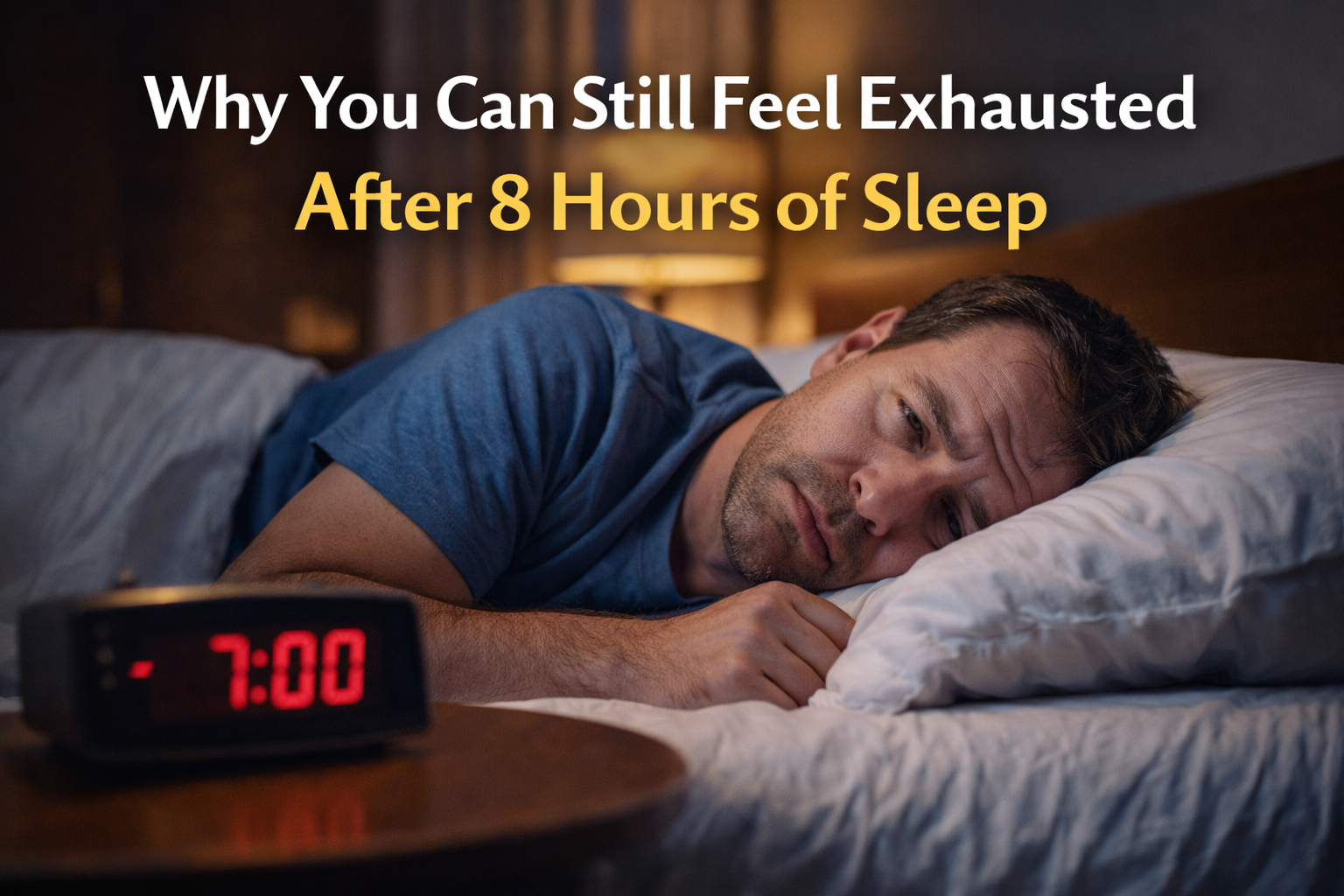
When “Enough Sleep” Still Isn’t Enough
Many people assume that getting seven to eight hours of sleep automatically means they should feel rested, yet millions of adults wake up every morning feeling exhausted, foggy, or unmotivated, even after what looks like a full night in bed.
If you regularly ask yourself, “Why am I still tired after 8 hours of sleep?” you’re not alone. Persistent fatigue is one of the most searched sleep related complaints in the United States, and in many cases, the issue is not how long you sleep, but the quality of sleep you are getting each night.
Understanding the difference between sleep quantity and sleep quality is essential, especially when conditions like snoring and sleep apnea may be disrupting your rest without you realizing it.
Sleep Duration vs Sleep Quality: What Most People Get Wrong
Sleep duration refers to the total number of hours you spend asleep. Sleep quality refers to how restorative that sleep actually is.
According to the American Academy of Sleep Medicine, healthy sleep requires both adequate duration and uninterrupted progression through normal sleep stages. When breathing disruptions occur, the brain repeatedly wakes the body just enough to reopen the airway, even if you do not fully remember waking up.
These brief awakenings can happen dozens or even hundreds of times per night, preventing deep, restorative sleep.
Common signs of poor sleep quality include:
- Waking up feeling unrefreshed
- Morning headaches
- Brain fog or trouble concentrating
- Low energy throughout the day
- Irritability or mood changes
- Dependence on caffeine to function
Common Reasons You May Feel Tired Despite Sleeping 8 Hours
There are several medically recognized reasons why sleep can fail to restore energy.
Undiagnosed Sleep Apnea
Obstructive sleep apnea is one of the most common causes of persistent fatigue. It occurs when the airway collapses during sleep, repeatedly interrupting breathing and lowering oxygen levels.
The American Academy of Sleep Medicine estimates that nearly 30 million Americans have sleep apnea, yet most remain undiagnosed.
Sleep apnea commonly causes:
- Loud snoring
- Pauses in breathing during sleep
- Gasping or choking at night
- Frequent nighttime awakenings
- Excessive daytime sleepiness
Even when someone sleeps a full eight hours, sleep apnea prevents the body from reaching and maintaining deep sleep stages.
Snoring and Upper Airway Resistance
Snoring is often dismissed as harmless, but chronic snoring can signal airway resistance that disrupts sleep quality.
Research shows that increased airway resistance can fragment sleep and reduce oxygen delivery to the brain, leading to fatigue even in the absence of a formal sleep apnea diagnosis.
Frequent Micro Awakenings
Micro awakenings are brief arousals from sleep that occur so quickly you may not remember them. They are commonly triggered by:
- Breathing interruptions
- Oxygen drops
- Snoring vibrations
- Restless sleep patterns
Over time, these repeated interruptions significantly reduce restorative sleep.
Why Fatigue Is Often the First Symptom People Notice
Daytime fatigue is one of the most common early signs of sleep disordered breathing. Unfortunately, it is also one of the most commonly overlooked.
Fatigue is often attributed to:
- Stress
- Busy schedules
- Aging
- Poor diet
- Lack of exercise
While these factors can contribute, ongoing exhaustion despite adequate sleep duration should not be ignored.
The Centers for Disease Control and Prevention notes that chronic sleep disruption is linked to increased risk of:
- High blood pressure
- Heart disease
- Type 2 diabetes
- Depression and anxiety
- Workplace and driving accidents
Why Lifestyle Changes Alone May Not Fix the Problem
Healthy habits matter, but they cannot correct structural airway collapse during sleep.
Even individuals who:
- Exercise regularly
- Maintain a healthy weight
- Eat a balanced diet
- Avoid alcohol before bed can still experience sleep apnea or airway resistance.
This is why persistent fatigue often continues despite doing “everything right.
When to Consider Sleep Apnea Testing
A sleep study is the only way to determine whether sleep apnea or another sleep disorder is present. Testing may be recommended if fatigue is accompanied by:
- Loud or chronic snoring
- Breathing pauses observed by a partner
- Morning headaches
- Difficulty staying awake during the day
- Poor concentration or memory issues
- High blood pressure that is difficult to control
Sleep studies can be performed in a sleep lab or at home, depending on medical guidance.
How Treating Sleep Apnea Can Restore Energy
When sleep apnea is properly diagnosed and treated, many patients report dramatic improvements in how they feel.
Benefits of treatment may include:
- Improved daytime energy
- Better focus and mental clarity
- Reduced morning headaches
- Improved mood
- Better blood pressure control
- Increased motivation for healthy routines
Treatment options may include CPAP therapy or oral appliance therapy provided by a dentist trained in dental sleep medicine, depending on severity and patient preference.
Feeling Tired Is Not Normal
Waking up exhausted after eight hours of sleep is not something you should accept as normal. In many cases, it is a signal that your body is not getting the restorative sleep it needs.
If fatigue persists, especially alongside snoring or disrupted sleep, evaluating for sleep apnea could be one of the most impactful steps you take for your health.
Better sleep is not about sleeping longer, it’s about sleeping better.