
Why Sleep Apnea Gets Worse With Age
Sleep Apnea and Aging: Why Symptoms Increase Over Time
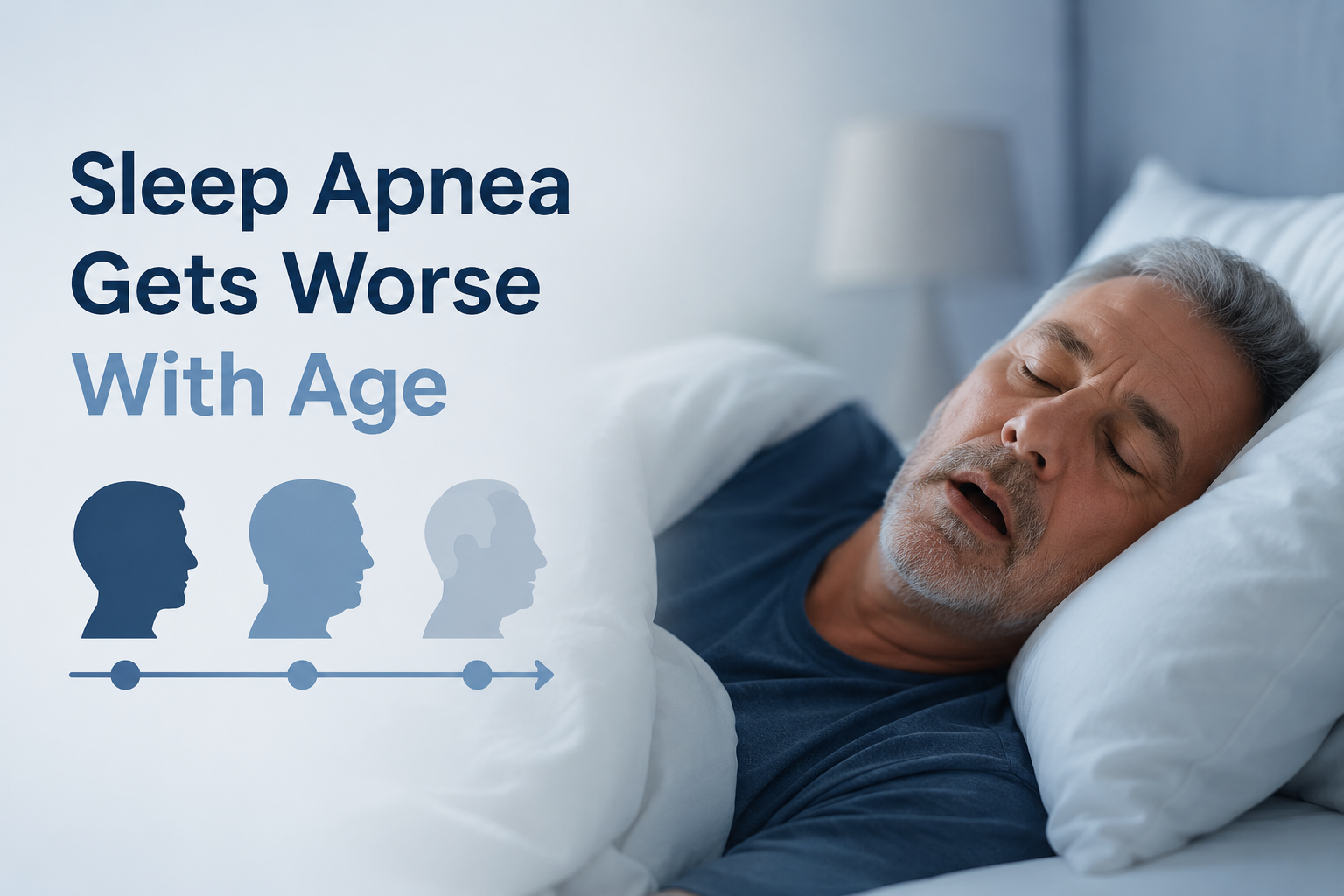
Why Getting Older Can Make Sleep Apnea More Serious
Sleep apnea affects people of all ages, but if you've been diagnosed, or suspect you might have it, there's something important to understand: for many people, it doesn't stay the same over time. As the body ages, several changes can make sleep apnea more frequent, more severe, and harder to ignore.
Here's what's happening, and what you can do about it.
Muscle Tone Decreases, Including in Your Airway
One of the most significant age-related changes that affects sleep apnea is the gradual loss of muscle tone throughout the body. This includes the muscles of the throat and upper airway. As these muscles weaken, they're more likely to relax and collapse during sleep, partially or fully blocking the airway and causing the breathing interruptions that define sleep apnea.
This is why someone who had mild sleep apnea in their 40s may find their symptoms noticeably worse by their 50s or 60s, even without significant weight changes or other lifestyle shifts.
Weight Tends to Redistribute
While weight gain at any age can worsen sleep apnea, the pattern of weight distribution often changes as we get older. Many people accumulate more fat around the neck, chest, and upper body with age, areas that directly affect airway pressure during sleep. Even modest weight gain in these areas can increase the frequency and severity of apnea events overnight.
This isn't about blame, it's about understanding the physical mechanics so you can take them seriously.
Hormonal Changes Play a Role
For women, menopause brings significant hormonal shifts that are directly tied to sleep apnea risk. Estrogen and progesterone help maintain muscle tone and influence breathing regulation during sleep. As these hormones decline, women who may have had little to no sleep apnea symptoms before menopause can find themselves developing the condition, or experiencing a sharp increase in severity.
Research consistently shows that postmenopausal women have sleep apnea rates much closer to men than premenopausal women do. It's a connection that often goes unrecognized, leading to years of poor sleep that goes untreated.
Other Health Conditions Compound the Problem
As we age, conditions like hypertension, diabetes, heart disease, and hypothyroidism become more common, and all of them have established links to sleep apnea. These conditions don't just coexist with sleep apnea; they can actively worsen it and be worsened by it in return.
Untreated sleep apnea puts significant strain on the cardiovascular system. Over years and decades, that strain compounds. This is why addressing sleep apnea earlier, rather than waiting until symptoms become severe, is consistently recommended by sleep medicine providers.
Cognitive Changes Are a Warning Sign
Many people assume that mental fogginess, memory lapses, or difficulty concentrating are just a natural part of aging. And while some cognitive changes are normal, sleep apnea is a known and treatable contributor to cognitive decline. Chronic sleep fragmentation, which is what sleep apnea causes night after night, deprives the brain of the deep, restorative sleep it needs to consolidate memory and clear metabolic waste.
If you or someone you love is noticing more forgetfulness or reduced mental sharpness, a sleep evaluation is worth putting on the list.
What You Can Do
The most important thing to understand is that worsening sleep apnea is not inevitable in the sense that it can't be managed. It can. Treatment options, including oral appliance therapy, which repositions the jaw during sleep to keep the airway open, are effective at any age and can be adjusted as needs change over time.
If you were diagnosed with mild sleep apnea years ago and haven't been re-evaluated recently, now is a good time. Severity can change, and your treatment plan should keep up.
If you've never been evaluated but recognize yourself in any of the patterns above, the fatigue, the snoring that's gotten louder, the morning headaches, a consultation is a low-barrier first step.
Age Is Not a Reason to Accept Poor Sleep
Feeling rested isn't a luxury reserved for younger people. At any age, quality sleep is essential, for your heart, your brain, your mood, and your long-term health. Sleep apnea is treatable, and it's never too late to address it.