
The 7 Warning Signs of Sleep Apnea Many People Ignore
7 Warning Signs of Sleep Apnea Many People Ignore
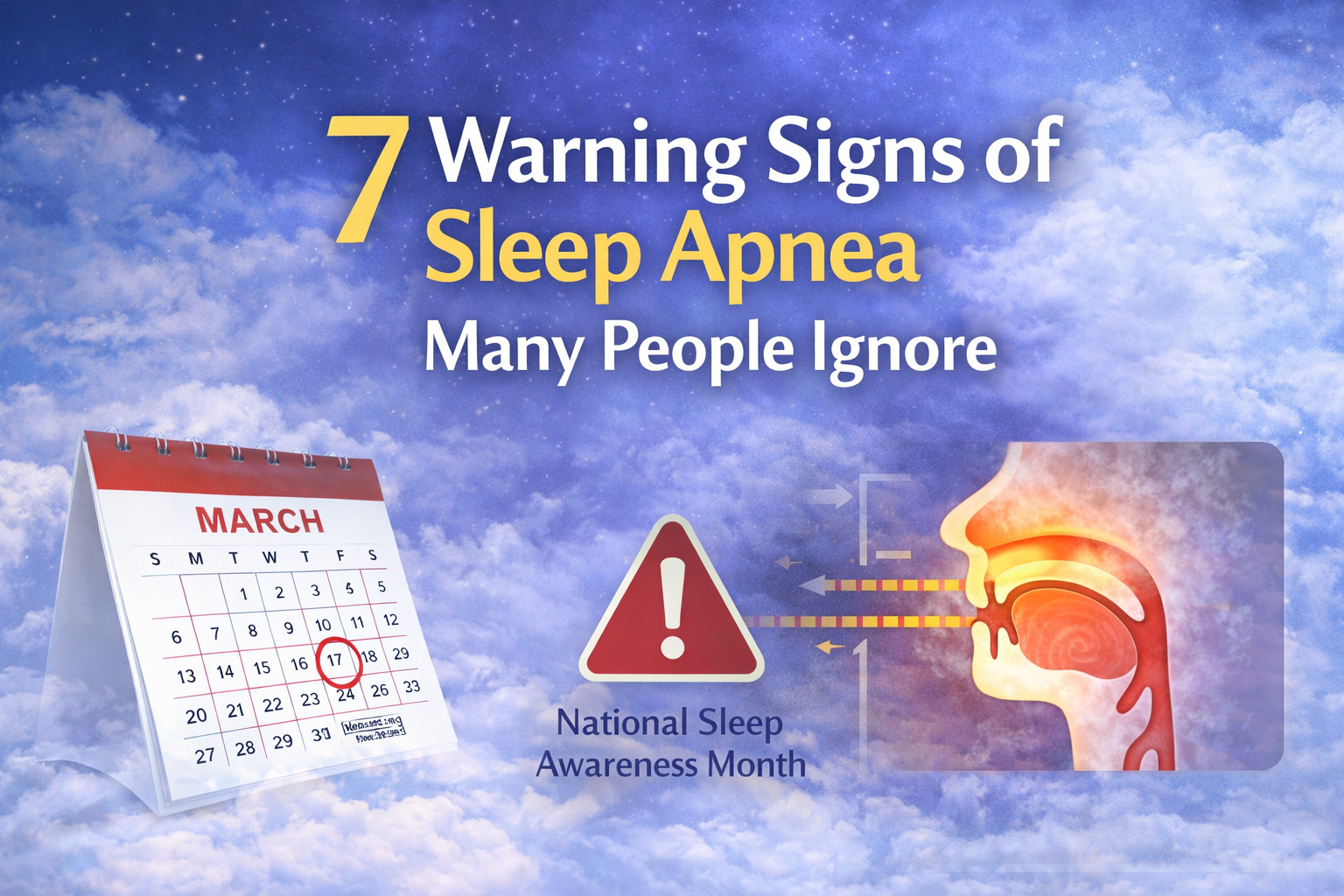
March is recognized as National Sleep Awareness Month, a time dedicated to educating people about the importance of healthy sleep habits and identifying sleep disorders that often go undiagnosed.
Millions of adults experience symptoms of sleep apnea without realizing it. Because the condition occurs during sleep, many people assume their fatigue, headaches, or brain fog are simply part of a busy lifestyle.
In reality, these symptoms may be signs that breathing is being interrupted throughout the night.
National Sleep Awareness Month serves as a reminder to take a closer look at sleep health and recognize the early warning signs that something may not be right.
7 Warning Signs of Sleep Apnea Many People Ignore
Many symptoms of sleep apnea develop gradually, which makes them easy to overlook. If several of the following signs sound familiar, it may be worth discussing your sleep with a professional.
1. Loud, Persistent Snoring
Frequent, loud snoring is one of the most common indicators of sleep apnea.
Snoring occurs when airflow becomes restricted in the airway during sleep. While not everyone who snores has sleep apnea, chronic loud snoring is often a strong warning sign that breathing may be disrupted.
Bed partners are often the first to notice this symptom.
2. Waking Up Feeling Unrefreshed
Many individuals with sleep apnea spend enough time in bed but still wake up feeling exhausted.
Because breathing interruptions repeatedly disrupt sleep cycles, the body may struggle to reach the deep stages of sleep needed for full recovery.
This can leave people feeling drained even after a full night of sleep.
3. Excessive Daytime Sleepiness
Feeling unusually tired during the day is another common sign.
People with untreated sleep apnea may experience:
• Difficulty staying awake during meetings
• Falling asleep while watching television
• Struggling to stay alert while driving
Persistent daytime fatigue often signals that sleep quality is being disrupted at night.
4. Morning Headaches
Low oxygen levels and interrupted sleep can trigger headaches in the morning.
These headaches often fade within a few hours after waking but may occur regularly when sleep apnea is present.
5. Difficulty Concentrating or Brain Fog
Sleep apnea doesn’t just affect physical energy. It can also impact cognitive performance.
Many people report:
• Trouble concentrating
• Forgetfulness
• Slower thinking or decision making
When the brain doesn’t receive consistent oxygen and restorative sleep, mental clarity can suffer.
6. Waking Up with a Dry Mouth or Sore Throat
Breathing disruptions often cause individuals to breathe through their mouth during sleep.
As a result, many people with sleep apnea wake up with:
• Dry mouth
• Sore throat
• Irritated airways
This symptom is frequently overlooked but can be an important clue.
7. Irritability or Mood Changes
Poor sleep affects emotional regulation and stress levels.
When sleep is fragmented night after night, it can lead to:
• Increased irritability
• Mood swings
• Higher stress levels
Many people don’t realize these emotional changes may be linked to disrupted sleep.
Why Sleep Apnea Often Goes Undiagnosed
One reason sleep apnea is frequently overlooked is that most symptoms occur while someone is asleep.
Many individuals assume their fatigue or headaches are caused by stress, aging, or a demanding schedule.
Because the breathing interruptions happen during the night, they often go unnoticed until a partner observes them or symptoms worsen over time.
This is why awareness campaigns like National Sleep Awareness Month play an important role in encouraging people to evaluate their sleep health.
When to Consider a Sleep Evaluation
If you recognize several of these warning signs, it may be helpful to speak with a sleep professional.
A sleep study can determine whether breathing disruptions are occurring during sleep and whether sleep apnea may be present.
Sleep studies can often be completed in a sleep lab or through convenient at-home testing.
Improving Sleep Starts with Awareness
Healthy sleep is essential for physical recovery, mental clarity, and long-term health.
National Sleep Awareness Month serves as an important reminder that persistent fatigue, loud snoring, and morning headaches should not be ignored.
Recognizing the early signs of sleep apnea can be the first step toward improving sleep quality and overall well-being.
If symptoms such as daytime fatigue, loud snoring, or difficulty concentrating are present, a professional sleep evaluation can help determine the underlying cause and guide appropriate treatment options.