
What Your Snoring Is Trying to Tell You About Your Health
What Your Snoring Is Trying to Tell You About Your Health
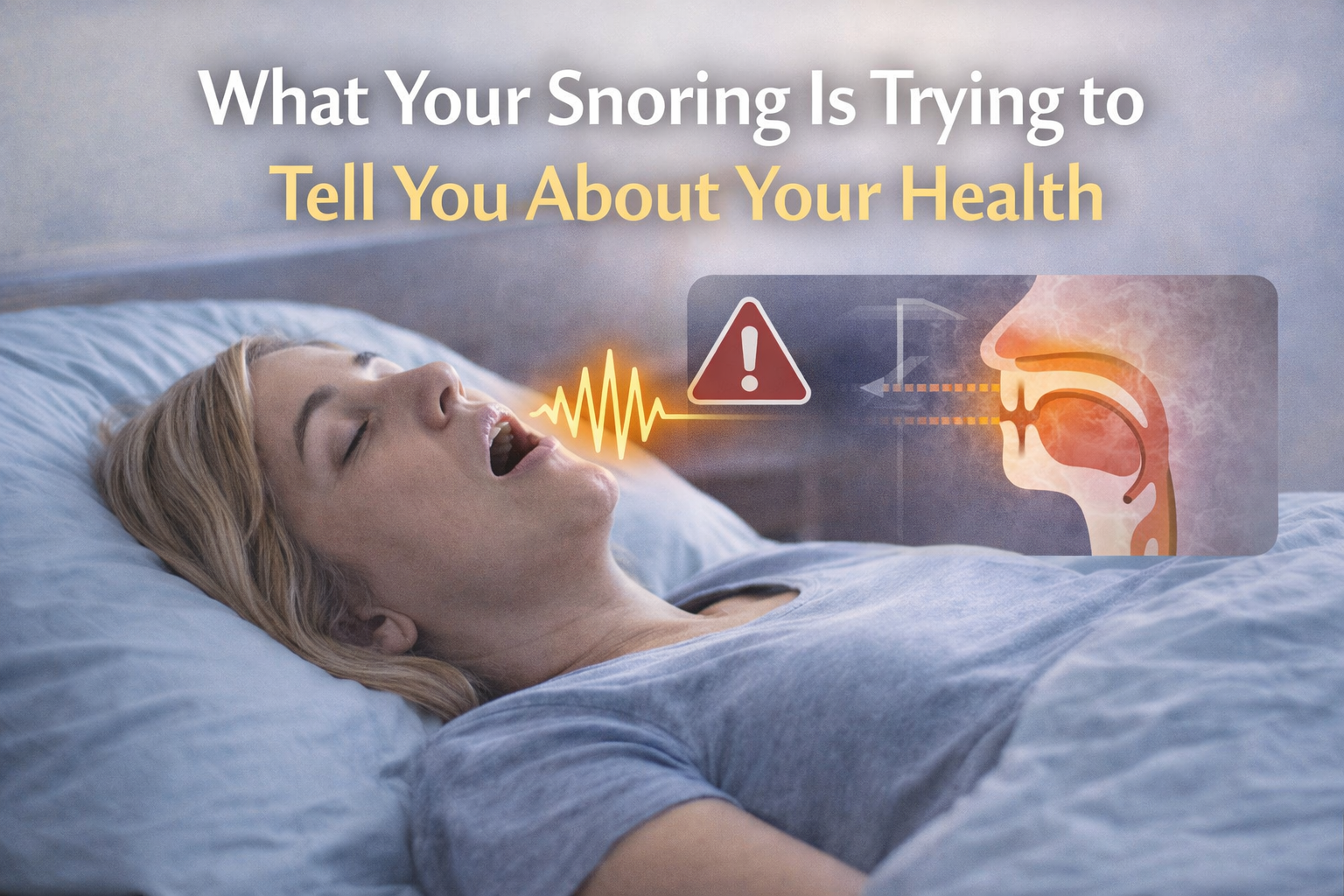
Snoring Is Common — But It Shouldn’t Be Ignored
Many people think of snoring as nothing more than a nighttime annoyance. It’s often joked about or dismissed as something that simply comes with age.
But snoring is actually a sign that airflow is being restricted while you sleep.
For some individuals, occasional snoring may be harmless. However, frequent or loud snoring can indicate a deeper issue involving the airway, including obstructive sleep apnea.
Understanding what your snoring may be telling you can help protect both your sleep quality and your long-term health.
Why Snoring Happens
Snoring occurs when air struggles to move freely through the airway during sleep.
When the muscles in the throat relax, the airway can narrow. As air moves through this restricted space, it causes surrounding tissues to vibrate, creating the familiar sound of snoring.
Several factors can increase the likelihood of snoring, including:
• Nasal congestion
• Sleeping on your back
• Alcohol consumption before bed
• Excess weight around the neck
• Naturally narrow airways
While occasional snoring may be harmless, persistent snoring can indicate ongoing airway obstruction.
When Snoring Becomes a Warning Sign
Not all snoring is the same.
Light, occasional snoring may simply occur during a cold or after a night of poor sleep habits. However, loud, chronic snoring often signals that breathing is being disrupted repeatedly during sleep.
In many cases, this can be a sign of obstructive sleep apnea.
Sleep apnea occurs when the airway becomes partially or completely blocked, causing breathing to pause throughout the night. Each pause can briefly wake the brain to restore breathing, disrupting the normal sleep cycle.
Because these awakenings are often extremely short, most people don’t remember them happening.
Signs That Snoring May Be Related to Sleep Apnea
If snoring is accompanied by other symptoms, it may indicate a more serious sleep disorder.
Common warning signs include:
• Excessive daytime fatigue
• Morning headaches
• Difficulty concentrating
• Waking up with a dry mouth
• Irritability or mood changes
• Witnessed pauses in breathing during sleep
• Gasping or choking during the night
When these symptoms occur alongside loud snoring, a sleep evaluation may be recommended.
How Snoring Can Affect Overall Health
Chronic snoring and sleep apnea don’t just affect sleep quality. Over time, repeated breathing interruptions can place strain on several systems in the body.
Potential impacts may include:
Reduced oxygen levels
during sleep
Increased stress on the cardiovascular system
Poor sleep quality and daytime fatigue
Impaired concentration and cognitive performance
Because sleep plays such a critical role in physical and mental recovery, disruptions to breathing during sleep can affect overall well-being.
Why Many People Don’t Realize Their Snoring Is a Problem
One challenge with sleep-related breathing disorders is that many symptoms occur while a person is asleep.
Often, the first person to notice the signs is a bed partner or family member who hears loud snoring or observes pauses in breathing.
Many individuals only begin to investigate their sleep health after years of fatigue or after someone else points out their nighttime symptoms.
This is why increasing awareness of sleep health is so important.
Improving Sleep Starts with Understanding the Cause
If snoring is frequent or disruptive, it may be helpful to identify the underlying cause.
Simple lifestyle changes can sometimes reduce snoring, such as:
• Sleeping on your side
• Avoiding alcohol close to bedtime
• Addressing nasal congestion
• Maintaining a consistent sleep schedule
However, if airway obstruction or sleep apnea is involved, additional evaluation may be needed.
A sleep study can determine whether breathing disruptions are occurring during sleep and help guide appropriate treatment options.
Snoring May Be Your Body Asking for Attention
While snoring is often dismissed as harmless, it can sometimes be the body’s way of signaling that breathing is not occurring normally during sleep.
If snoring is loud, frequent, or accompanied by daytime fatigue or other symptoms, it may be worth taking a closer look at your sleep health.
Identifying and addressing sleep-related breathing issues can improve sleep quality, restore energy levels, and support long-term health.
Understanding what your snoring may be telling you is an important first step toward better rest.