
The Connection Between Stress and Sleep Apnea (And What You Can Do About It)
The Connection Between Stress and Sleep Apnea
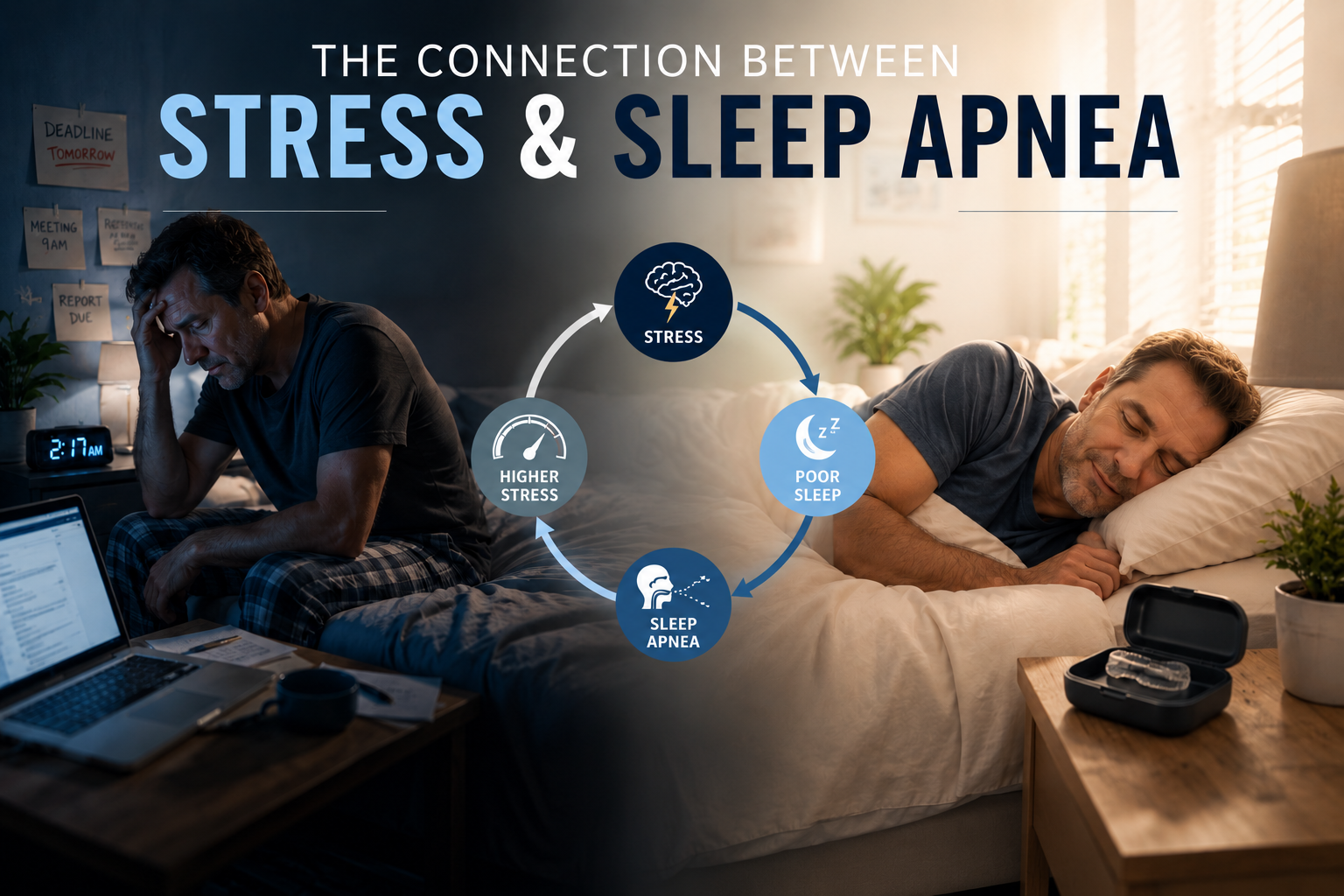
Stress and sleep apnea fuel each other in a cycle that's hard to break. Learn how chronic stress affects your airways, what symptoms to watch for, and how treatment can help.
Most people know that stress messes with sleep. You’ve probably experienced it yourself, a big deadline looming, a rough week at work, or just the general weight of life piling up, and suddenly you’re lying awake at 2am with your brain running a highlight reel of everything you forgot to do.
But the relationship between stress and sleep goes deeper than just tossing and turning. For people with sleep apnea, or those at risk, stress can actually make the condition worse. And poor sleep, in turn, makes stress harder to manage. It’s a cycle that’s worth understanding.
How Stress Affects Your Sleep
When you’re stressed, your body releases cortisol, the hormone responsible for your “fight or flight” response. Cortisol is useful in short bursts, but when stress becomes chronic, cortisol levels stay elevated. That keeps your nervous system in a heightened state, making it harder to fall asleep, stay asleep, and reach the deep, restorative stages of sleep your body needs.
Chronic stress is also linked to increased muscle tension, including in the throat and airways. For people with sleep apnea, that tension can contribute to more frequent airway collapse during sleep, which means more apnea events and worse sleep quality overall.
The Cycle: Poor Sleep Makes Stress Worse
Here’s where it gets frustrating: sleep deprivation, whether from stress, sleep apnea, or both, makes your body’s stress response more reactive. When you’re running on poor sleep, your cortisol levels are already elevated going into the next day. Small stressors feel bigger. Your patience runs shorter. Your ability to regulate emotions takes a hit.
So stress disrupts sleep, and disrupted sleep amplifies stress. For people with undiagnosed or untreated sleep apnea, this cycle can go on for years, quietly draining energy, mood, and long-term health, without anyone connecting the dots.
Stress as a Risk Factor for Sleep Apnea
Stress doesn’t directly cause sleep apnea, but it can contribute to conditions that do. Chronic stress is associated with weight gain, particularly around the neck and midsection, which is one of the leading risk factors for obstructive sleep apnea. Stress also often leads to lifestyle habits (poor diet, less exercise, more alcohol) that increase apnea risk.
Additionally, high stress levels can increase nasal congestion and inflammation in the upper airway, both of which make breathing during sleep more difficult.
Signs You Might Be Dealing With Both
It can be hard to tell where stress ends and sleep apnea begins, because many of the symptoms overlap. Watch for:
- Waking up feeling unrefreshed, even after a full night in bed
- Daytime fatigue or brain fog that doesn’t improve with rest
- Increased anxiety or irritability
- Morning headaches
- Loud snoring or waking up gasping (or a partner who’s noticed it)
- Difficulty concentrating or staying focused during the day
If you’re checking multiple boxes here, it’s worth looking into both stress management and a sleep evaluation, not just one or the other.
Breaking the Cycle
The good news is that treating sleep apnea often has a significant positive effect on stress and mental health. When your body is actually getting restorative sleep, cortisol levels normalize, emotional regulation improves, and day-to-day stress becomes more manageable. Patients frequently report that they feel calmer, more focused, and more like themselves after starting treatment.
Treatment options vary depending on the severity of your sleep apnea. CPAP therapy is common, but oral appliance therapy, a custom-fit mouthguard worn during sleep, is a comfortable, effective alternative that many patients find easier to stick with long-term. A dental sleep specialist can work with you to find the right fit.
Pairing sleep apnea treatment with stress management strategies, regular exercise, reducing alcohol, consistent sleep schedules, can help break the cycle from both ends.
Not Sure Where to Start?
If stress and poor sleep have become a regular part of your life, you don’t have to just push through it. Contact us to schedule a consultation, we’ll help you figure out what’s going on and what treatment options make sense for you.