
How Long Does It Take to Feel Better After Starting Sleep Apnea Treatment?
How Long Until Sleep Apnea Treatment Works?
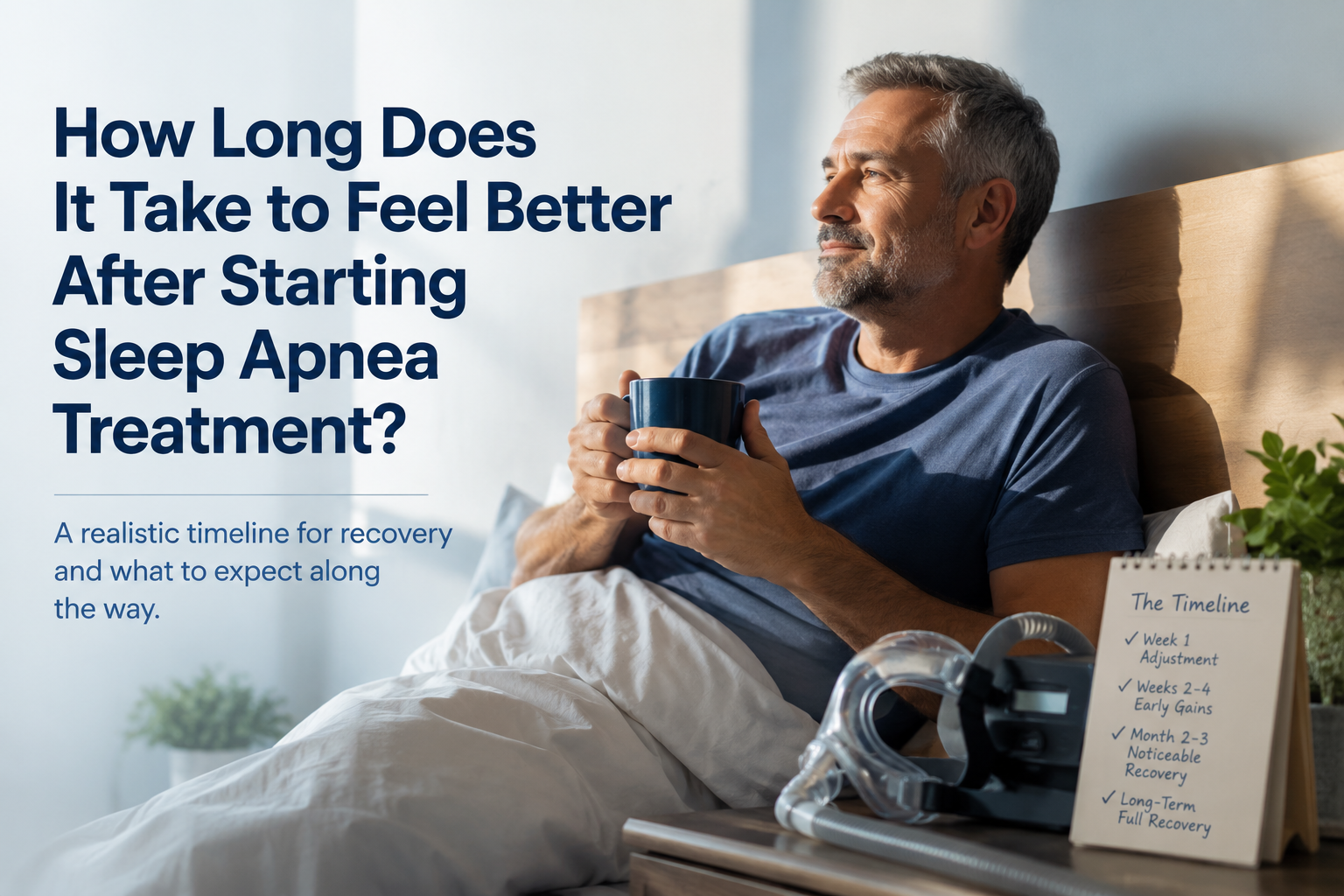
Just started sleep apnea treatment and wondering when you'll feel the difference? Here's a realistic, week-by-week look at what to expect as your body recovers.
You Started Treatment. So Why Don't You Feel Better Yet?
One of the most common questions new sleep apnea patients ask, usually within the first week or two of starting treatment, is some version of: "Is this actually working?"
It's a fair question. You made the appointment, got the diagnosis, and committed to treatment. You expected to wake up feeling like a new person. Instead, you still feel groggy, a little off, maybe even more aware of how tired you actually are.
Here's the honest answer: recovery from chronic sleep deprivation takes time. But the timeline is more predictable than most people expect, and understanding it makes the process significantly easier to stick with.
Why Your Body Doesn't Bounce Back Overnight
Sleep apnea doesn't just interrupt your breathing, it fragments your sleep architecture over months or years. Your brain has been repeatedly pulled out of deep, restorative sleep stages night after night, often hundreds of times per night in severe cases. The resulting sleep debt doesn't disappear in a few days.
Think of it less like flipping a switch and more like rehabbing an injury. The treatment addresses the root cause immediately, but the body needs time to rebuild what was lost.
Week 1: Adjustment, Not Results
The first week of treatment, whether you're using a CPAP machine or an oral appliance, is largely about adjustment. Your body is adapting to a new sleep experience, and your brain is recalibrating to uninterrupted breathing cycles it may not have experienced in years.
Most patients report that their sleep feels different during this phase, sometimes lighter, sometimes more vivid with dreams (a sign of REM rebound, which is your brain catching up on lost dream sleep). Don't interpret feeling strange as feeling worse. It's part of the process.
Some patients do notice an improvement in energy within the first few days. Others don't feel much yet. Both are normal.
Weeks 2–4: Early Gains
By the second and third week, most patients start noticing meaningful changes. Daytime fatigue begins to lift. Morning headaches that were a daily occurrence start showing up less frequently. Mood often improves before energy levels do, partners and family members sometimes notice the difference before the patient does.
This is also the window where compliance matters most. Patients who use their treatment device consistently every night, even when it feels uncomfortable or inconvenient, see significantly better outcomes than those who skip nights. Your brain needs consecutive nights of quality sleep to start genuinely recovering.
If you're using an oral appliance, your provider may schedule a follow-up during this period to check fit and make any necessary adjustments. Don't skip that appointment, small tweaks can make a meaningful difference in comfort and effectiveness.
Month 2–3: Noticeable Recovery
For most patients, the one to three month mark is when the changes become hard to ignore. Energy levels stabilize. Cognitive sharpness, the ability to focus, retain information, and think clearly, begins returning to baseline. Many patients report that they didn't fully realize how impaired they'd been until they started feeling normal again.
Blood pressure, if elevated, often begins to improve during this window as well. Sleep apnea puts significant strain on the cardiovascular system, and consistent treatment starts relieving that strain over time.
Long-Term: The Full Picture
Full recovery, meaning optimal sleep quality, normalized cardiovascular function, and restored cognitive performance, can take six months to a year for patients with moderate to severe sleep apnea. This isn't a reason for discouragement. It's a reason to stay consistent.
The patients who see the best long-term outcomes are the ones who treat compliance as non-negotiable in those early weeks, communicate openly with their provider when something isn't working, and give the process enough time to do what it's designed to do.
What If You're Not Improving?
If you're several weeks into treatment and not noticing any improvement, that's worth a conversation with your provider, not a reason to quit. Common culprits include poor device fit, mouth breathing that's bypassing the treatment, positional factors, or a need to revisit the diagnosis itself.
Treatment is adjustable. The goal is to find what works for your specific anatomy and sleep patterns, and that sometimes takes more than one iteration.
The Short Answer
Most patients feel noticeably better within two to four weeks. Most feel significantly better within three months. Full recovery can take up to a year. The timeline varies, but the direction is consistent, and it starts the night you begin treatment.
Have questions about your treatment progress? Contact us, we're here to help you get the most out of your care.