
How Sleep Apnea Impacts Heart Health
How Sleep Apnea Impacts Heart Health | Everything that is impacted
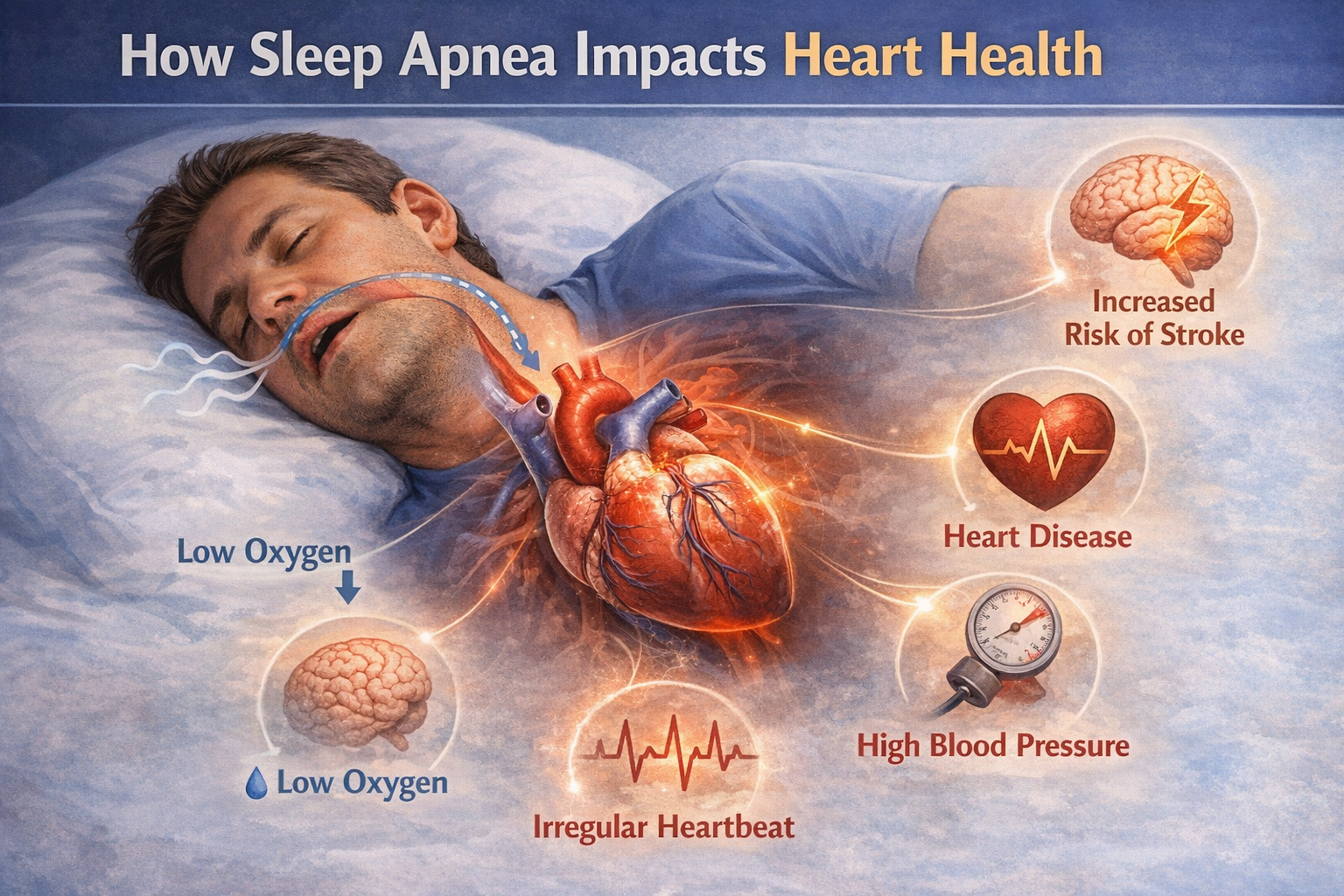
Sleep is vital for restoring the body, but when sleep is disrupted by conditions like sleep apnea, the consequences extend far beyond daytime fatigue. Obstructive sleep apnea (OSA), the most common form, is more than just loud snoring or restless nights. It has been closely linked to serious cardiovascular problems, including high blood pressure, heart disease, stroke, and arrhythmias.
Understanding how sleep apnea impacts heart health is essential—not just for those already diagnosed, but for anyone who may be at risk. In this article, we’ll explore the connection between sleep apnea and cardiovascular health, why early detection matters, and what steps you can take to protect your heart.
The Link Between Sleep Apnea and the Heart
When someone experiences sleep apnea, their airway becomes partially or completely blocked during sleep. This blockage causes pauses in breathing—sometimes lasting 10 to 30 seconds or longer—forcing the brain to wake the body repeatedly to restore airflow. These interruptions put the body in a constant state of stress.
Every apnea episode leads to a drop in blood oxygen levels, which signals the nervous system to release stress hormones like adrenaline. Over time, this repeated cycle increases blood pressure, strains the cardiovascular system, and damages the delicate lining of blood vessels. According to the American Heart Association, patients with untreated sleep apnea have a higher risk of developing cardiovascular disease, even if they don’t show other obvious health problems .
Sleep Apnea and High Blood Pressure
High blood pressure (hypertension) is one of the most common complications of untreated sleep apnea. Each time breathing stops, oxygen levels drop, causing blood vessels to constrict. This raises blood pressure during sleep and often carries over into the daytime.
In fact, the American Academy of Sleep Medicine notes that more than 50% of people with OSA also have hypertension . Treating sleep apnea, particularly with therapies like CPAP (continuous positive airway pressure), has been shown to significantly reduce blood pressure and improve overall cardiovascular health.
Heart Rhythm Disorders and Sleep Apnea
Sleep apnea is also strongly associated with arrhythmias—abnormal heart rhythms. Atrial fibrillation (AFib), the most common type of arrhythmia, has been linked to OSA in multiple studies. During apneic episodes, drops in oxygen and surges in blood pressure can cause the heart to beat irregularly.
Patients with untreated sleep apnea not only face a higher risk of developing AFib, but also of recurrence after treatments like ablation. According to the National Institutes of Health, effective sleep apnea management improves heart rhythm stability .
Sleep Apnea and Risk of Heart Disease and Stroke
Beyond hypertension and arrhythmias, untreated sleep apnea significantly increases the risk of heart attack, heart failure, and stroke. Chronic oxygen deprivation and the repeated stress response damage blood vessels, making them more prone to plaque buildup and narrowing (atherosclerosis).
A large-scale study published in the Journal of the American College of Cardiology found that people with moderate to severe sleep apnea are two to three times more likely to develop heart disease compared to those without OSA . The risk of stroke also rises, with untreated OSA contributing to both initial strokes and higher recurrence rates.
Protecting Your Heart Through Sleep Apnea Treatment
The good news is that treatment for sleep apnea can significantly improve heart health. Options include:
- CPAP Therapy – The gold standard treatment that keeps the airway open with continuous air pressure.
- Oral Appliance Therapy – Custom-made dental devices that reposition the jaw and tongue to improve airflow.
- Lifestyle Changes – Weight management, reducing alcohol intake, and quitting smoking can improve both sleep apnea and heart health.
- Surgical Options – In some cases, procedures to remove tissue or realign airway structures may be recommended.
The American Thoracic Society notes that treating sleep apnea with CPAP or oral appliances not only improves sleep but also reduces cardiovascular risk factors .
When to Seek Help
If you or a loved one snores loudly, wakes up gasping for air, or feels excessively tired despite a full night’s sleep, it’s important to get evaluated for sleep apnea. Left untreated, sleep apnea quietly but powerfully strains the heart over time.
Schedule a consultation with a sleep apnea specialist or a sleep dentist who can assess your symptoms and recommend appropriate treatment. Early intervention could be lifesaving.
Conclusion
Sleep apnea is far more than a nighttime nuisance—it’s a serious medical condition with significant effects on cardiovascular health. From high blood pressure to heart failure, the evidence is clear: untreated sleep apnea places unnecessary strain on the heart.
The encouraging news is that treatment works. Whether through CPAP, oral appliances, or lifestyle changes, addressing sleep apnea can protect both your sleep and your heart for years to come.